
TRAFFIC!
- Feb 8
- 5 min read
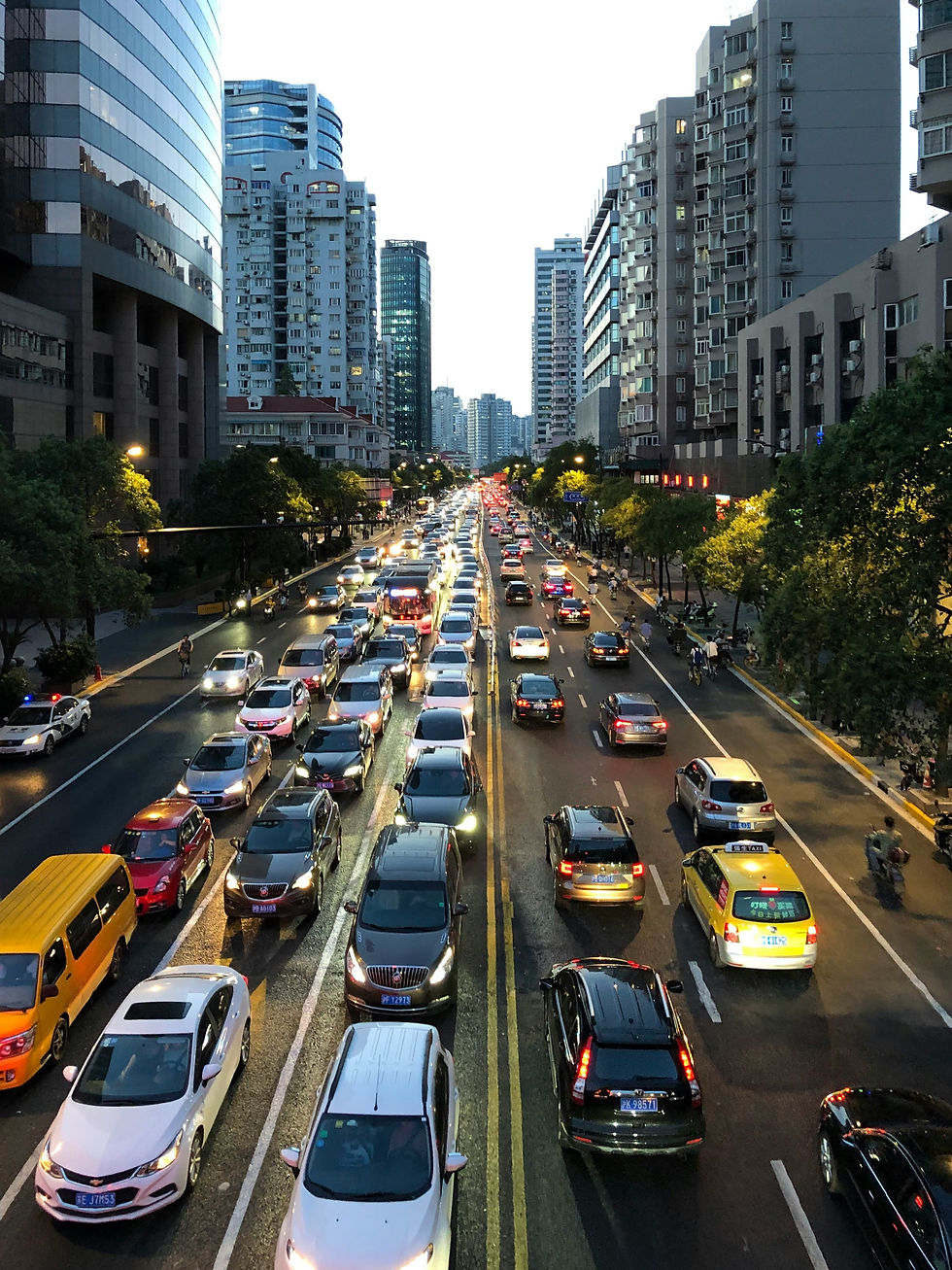
We've all been there - cruising along when all of a sudden, a traffic jam appears seemingly out of nowhere. We find ourselves sitting in a bumper-to-bumper jam up with no way to ramp off or turn around to avoid it.
This post came at a reader's request as one of their pet peeves. Let's talk about not only traffic, but how people drive in general.
While this topic is something we can all relate to, I wanted to do my due diligence and did some research on the subject. According to the NHTSA (National Highway Traffic Safety Administration) and Hedges and Company, there are approximately 299 million cars and trucks on the U.S. Road today with close to four million of those right here in Pennsylvania.
Sorry guys - Statistically, men are more responsible for traffic accidents (both fatal and non-fatal) than women. In latest data, over 72% of fatal car crashes were caused by men and 59% of all drivers involved in any kind of road accident were men compared to 41% for women.
You might guess why - Men are more likely to engage in:
Speeding
Driving under the influence
Engage in aggressive driving
Use their seat belts less often
To be fair, men drive more miles per year than women, so that increases their exposure on the road along with the likelihood of being involved in an accident.
What about age groups? Statistics from the NSC, IIHS and Consumer Affairs data says:
Under 25 - high crash rates, especially fixed-object crashes
25-44 - Peak number of fatal crashes
45-64 - Crash numbers decline but remain substantial
65-74 - Lower crash rates than younger groups
75+ Highest fatality rate per population
Who's having these accidents? According to several databases:
Non-Hispanic Black Americans, Hispanic/Latino Americans, and Native American/Indigenous populations have higher than average nonfatal crashes.
Despite the stereotype depicted in movies and television, non-Hispanic Asian Americans have lower non-fatal crashes.
White Americans make up ~59% of the U.S. Population and account for ~50% of traffic accidents.
Interestingly enough, the United States lacks accurate non-fatal crash data by race/ethnicity because many states do not require police officers to record race/ethnicity and the field is normally left blank on those states that do ask for it on police reports. Officers frequently guess race visually which introduces errors and many states EXPLICITLY prohibit collecting demographic data in minor crashes.
Okay, that's some stats to chew on (not while you're driving please). Let's explore drivers today and what we're doing or NOT doing. There appears to be a trend among U.S. drivers:
Failure to use their turn signals - (Sorry, left my mind-reading hat at home, didn't know you were turning in front of me!)
Tailgating, especially at high speeds (C'mon buddy, you're in my way and I've got gas enough to push us both if you'd rather!)
Parking in handicap zones, taking up two spots, not leaving enough room for the driver in front or behind me to get out when parallel parking.
Stopped or idling in a driving lane - This is especially bad in Allentown, which has taken steps to ticket people who just sit in their car waiting for someone to come out - sometimes the car is even left there running with no one inside.
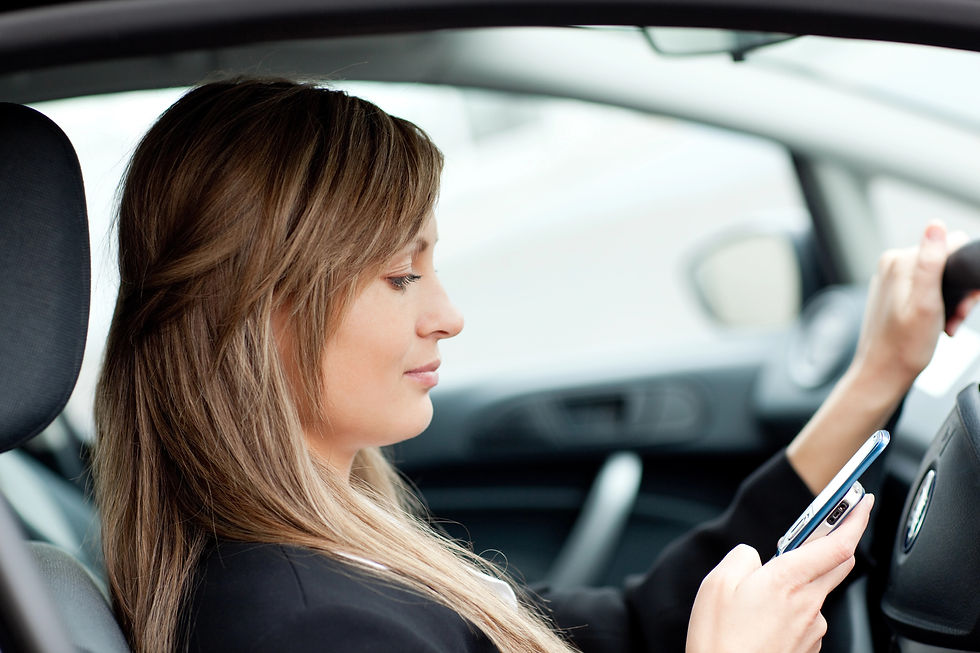
Distracted driving - Even with new no-touch your cell phone laws, people are texting, holding conference calls, watching videos, eating, shaving, doing their nails, just about everything you can think of except keeping their eyes on the road. For years, I saw a gentleman on the Pennsylvania turnpike with the newspaper on his steering wheel catching up on the day's events as he cruised down the northeast extension.
Let's talk a little about roads and infrastructure. Pennsylvania is not known for have the greatest on and off ramps. You've got to put the car in ROCKET MODE when trying to merge onto some of our highways and God forbid that someone would get in the left lane to allow drivers entering a highway to gain safe passage.
For whatever reason, Pennsylvania has gone circle crazy. Proponents will tell you that roundabouts decrease kinetic energy transfer at potential collision sites by reducing speeds. Quakertown has one off Route 663 now. We're going to be treated to a circle sometime this year at the intersection of Routes 309 and 873 with the addition of a new business park. We went to Reading last night to via Route 222 and encountered not one, not two but THREE double lane circles that just reek of an accident waiting to happen.
The study of automobile safety and the science of traffic is fascinating to me. We've got a couple of friends and family members that own Teslas or vehicle with automatic braking capability. Others have self-driving functionality that they love. While I've yet to take the plunge into this world, I can certainly see the advantages and appreciate the safety aspects.
In major cities, entire networks are in place to help move traffic along and to anticipate or mitigate bad driving habits including:
Traffic Calming Devices (Speed bumps and bollards) to reduce speed through certain areas.
Higher visibility crosswalks to better capture the attention of drivers and improved pedestrian safety.
Narrower Lanes - while it seems counterproductive, reducing lane widths naturally slows down traffic and increases a driver's attention to the road.
Protected Bike Lanes - Big fan of this one!
Dynamic Speed Displays - signs that show drivers their speed to encourage voluntary compliance and reduce crashes (I will admit this one is counterproductive to me...I will turn to my wife and say, WATCH THIS...Yes, I'm a child sometimes).

Automated Speed Enforcement - Speed cameras/red-light cameras are used to consistently lower speeds and deter dangerous driving - nothing says love than a letter with a fine from the Commonwealth with a photo of your wide-eyed face through the windshield picking your nose as you cruise through a red light.
Larger metropolises like Los Angeles and New York employ traffic guidance systems that use AI to adjust how long a light is red or green to keep traffic moving along efficiently. They have entire teams sitting in rooms monitoring traffic all day long looking for choke points and redirect traffic dynamically minute-by-minute to keep us safe and rolling along. Sweden has a program called Project Zero that was implemented in 1995 to integrate safety into their transportation system. To the Swedes, the only acceptable number of serious traffic injuries is ZERO. They have redesigned their roads and infrastructure to embrace the fact that people are inherently human. They dumbed down their network to the lowest possible denominator...a bad driver. Everything they do is with that individual in mind and their efforts have reduced fatalities by 54%.
There will always be bad drivers. There will always be inconsiderate jerks behind the wheel of high-powered machines traveling at breakneck speeds making life miserable for the rest of us. But, between better safety devices on vehicles, better designed infrastructure on our roads, new and emerging technologies that help to minimize accidents and traffic delays, we may survive.
Hopefully, you didn't read this in the car on your way somewhere. Be safe! :)


Gotta watch those speed incentive grey haired guys with those hot cars! I know a few myself and they can be a bit out of control. (But they do have a helluva set of wheels)!!!! LOL!
Bad drivers, like tailgaters, and speed demons make everyone unsafe. They make the responsible driver angry and life is too short. As far as traffic circles, people need to be trained or taught how to use them, as there is no rhyme or reason for accidents in the circle. Remember, you both can't occupy the same space at the same time. As far as the gender advantage of females and fatalities goes, I question the percentage of drivers, mostly male, when husband and wife drive together, as many of the speeders and tailgaters I see are most definitely female.😙