
DRONES!!!
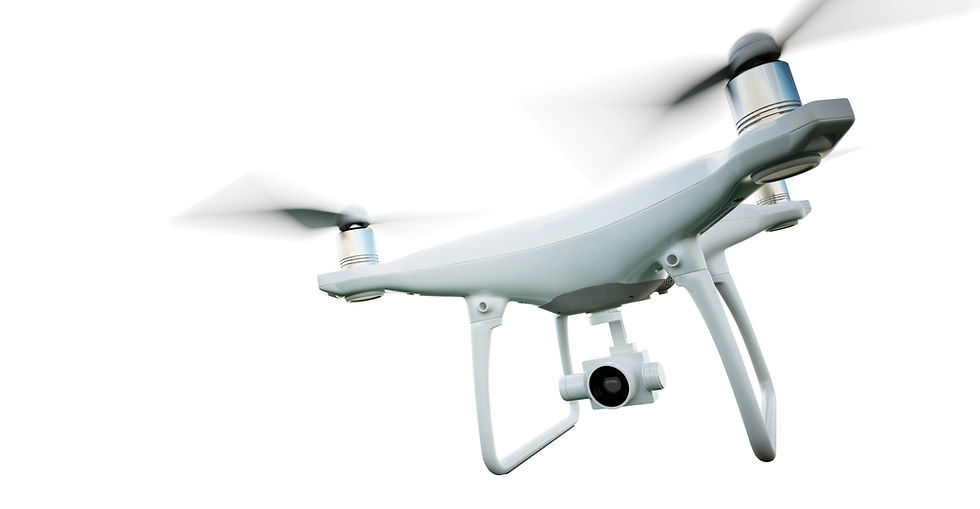
What??? Another article on Drones? Didn't he just do one?
For those of you that have been reading my posts since Roberts Reader started last fall, you may know that I write all the articles myself but research a ton of websites before sitting down to pen a story.
I initially started writing a general article on drone technology a few weeks ago but because of the operations in Iran, I kept running into news cycles that talked about how drones were being used in battle. I made a conscious decision to back burner THIS story to write about the operations in Iran and Israel as timelier. It's time to come back to this one.
Drones are nothing new in our family. My mom would say how Mrs. B next door would come over and drone on and on about how lazy Mr. B was, my uncle would drone on about the government and my teacher drones on about lesson plans. But I digress.
If you had to guess when the first drones were developed, you'd probably be as way off as I was. I figured conservatively around 1980 or so. It turns out that I was about 75 years off. The first UAV (Unmanned Aerial Vehicle) or drone was developed in 1907 by Jacque and Louis Breguet - it was a quadcopter that was unsteerable and required 4 men to stabilize it. It marked the beginning of drone technology.
Then in 1917, The Ruston Proctor Aerial Target became the first pilotless winged aircraft. It was designed to be a flying bomb and was radio controlled for use in WWI but never used in combat.

We've come a long way from that first prototype to the drones of today. With advances in both technology and innovation comes new inventive uses for drones. Common uses for drones today include:
Agriculture -Crop Monitoring/precision spraying
Infrastructure Inspection - Bridge, building, power line inspection as well as monitoring solar panels and wind turbines for faults to detect potential failures.
Emergency Services - Drones are used in search and rescue of missing persons using thermal imaging and to deliver supplies to stranded individuals. Additionally, they're used in wildfire management to monitor fire spread and intensity.
Delivery Services - Delivery companies are trialing drone delivery for food and medical supplies, and Amazon is looking at 30-minute delivery of items weighing 10 lbs. or less.
Environmental Monitoring - Drones capture images to study animal populations and habitats, aiding conservation efforts and provide real-time data during natural disasters.
Aerial Photography and Filming - Drones are used in filmmaking, photography for rial shots and unique perspectives.
Scientific Research - Nasa's Ingenuity drone on Mars conducts research and gathers data.
Urban Planning - Drones create detailed maps,3D models for urban development and infrastructure planning of mapping and surveying.
In addition to the "usual" uses for drones, there's some other unique ways drones are being deployed. We've already discussed the military uses for drones but here are some other ways drones are being employed:
Drone Fishing - Attach your line to a drone, fly it over the water and drop your bait there. Some even have fish finders attached to the drone.

Event Security and Crowd Management - Fly drones over concerts and events giving security a bird's eye view of what's going on real time.
Drone Light Shows - Safer than fireworks, silent, and don't leave behind smoke or litter.

Real Estate showings - what better way to showcase a house with video created by flying a small drone through rooms, around the yard and above the house and neighborhood.
Weddings - Drones are being used to video weddings as part of an added package.
Because drones are used in so many different ways and configurations, I imagined they differed in size as well.
According to dronenestle.com, the largest drone in the world as of January 1, 2026, is the RAVN-X. It's about as long as two school buses end to end and looks like a marriage between a bird and a missile. It's totally autonomous and is a rocket-launching drone that is designed to send small satellites into orbit without a pilot or launchpad. It takes off from a regular runway, climbs high into the atmosphere and releases a small rocket that's attached to its body. Once that rocket reaches space, it spits out satellites that weigh between 100 and 500 kilograms (about 1,100 pounds). The RAVN-X is 80 feet long with a wingspan of 60 feet, a height of 18 feet and weighs about 55,000 pounds (28 tons).

Conversely, the SMALLEST drone in production today is the UC Berkeley Micro-Drone. The UC Berkeley is insect-scale, weighs only 21 milligrams (0.00074075 ounces) and measures 0.9 cm in diameter (0.354 inches), so smaller than a honeybee. It doesn't use a battery but is instead powered entirely by externally applied magnetic fields which spin its two-magnet system to generate lift and allow for precise steering.

The UC Berkeley is an example of out-of-box thinking. By transferring the power source to an external system, it allows for this extreme degree of miniature design that would be impossible if the power needed to come from a battery or internal engine. While this drone only exists in controlled lab environments, the applications for its use include navigating through ventilation systems, collapsed structures, pipe networks or even the interior of complex machinery.
While these magnetic fields are not readily available in the field, it's causing architects and designers to rethink their construction plans to provide for the idea of electromagnetics or even radio waves that could provide sufficient power for flight for these tiny drones. Researchers are also exploring swarm applications where hundreds of these micro-drones could coordinate like insect colonies to accomplish complex tasks through collective behavior rather than individual capabilities. It reminds me of the BORG on Star Trek!

There is a theory that is taught in tech classes called Moore's Law. It's a term that indicates that the number of transistors in a dense integrated circuit (IC) doubles about every two years. Techies have long recognized that technology builds on itself. What we see now as "high tech" quickly becomes antiquated as newer concepts and technologies emerge. The same is true for drones. They're getting faster, stronger and more intelligent with each new design and can be packaged in a smaller box. Bolt Flight outlined five new drone technologies in an article published in August last year 5 Latest Drone Technologies You Need To Know - Bolt Flight that points to changes in UAV design that's going to change how we use drones in the future:
AI Integration and Autonomous Operations
Improved Sensors and Advanced Cameras
Extended Battery Life and Endurance
5G Connectivity
Swarm Drone Technology
The future is bright for drones. In addition to the above, drones will continue to evolve further through quantum computing efforts, hybrid propulsion systems and changes to regulatory laws and reforms. These advancements will allow industries, companies and individuals more flexibility in using and finding new uses for drones.


Comments